Cercar en aquest blog

Compte enrere

7 de des. 2021

The story of Joan Granollacs (1591), by Aleix Sarri


1. 430 years ago today, May 24, 1591, Joan Granollacs, a member of the Diputació del General, was walking down Carrer Montcada when a group of royal officers tried to arrest him. But who was Granollacs and why is he a key person in our history?
2. Joan Granollacs, as I was just saying, was a member of a family of the Catalan petty nobility of the 16th century, who had made money first through trade (cloth shopkeepers or wheat or cotton merchants) and then running the Generalitat (the Government of Catalonia)'s tax collection.
3. But Granollacs was not only that, he was also a very popular man and committed to defending the laws of the land and the Catalan constitutions against the authoritarian abuses of Philip II and the royal apparatus in Catalonia.
4. THis was so much so that when Granollacs was about to be arrested, perhaps leaving near Casa Bru (of the first houses on Montcada Street, owned by the Bru family of bankers, with whom he was related), a mass of people protected him from the royal agents.
5. The crowd, in which it seems that the brothers Miquel and Llorenç Junyent, among others, took part, defended Granollacs while shouting "Long live the Generalitat, death to the traitors of our country!".
6. Granollacs escaped and reached the "Casa del General" (presumably the current Palace of the Generalitat but without the Sant Jaume façade or the whole section of the Sant Jordi hall, which were built around 1600) where he took refuge with his followers.
7. The Diputación del General (the "government" of the day) quickly convened a Junta de Braços (the permanent committee) and an "Eighteenth" (a commission) was appointed to deal with the conflict and legally protect Granollacs's followers and himself.
8. "If the royal officials were tio be able to prosecute the persons of said deputies and hearers, they would not have liberty to defend the privileges, chapters of the court and liberties of the country, for by any slight matter they would be threatened with imprisonment."
9. And this is what the Diputación del General argued in defence of Granollacs. That the deputy should be immune from any attempted arrest by royal officials for his defence of the rights and freedoms of the country, that is, of Catalonia.
10. The conflict between the Catalan institutions and Philip II came from afar, and as early as 1569 the monarch had used the Inquisition to imprison deputie sat that time.
11. A few years earlier, in 1587-88, another conflict had broken out between the monarchy and the Catalan institutions, which was finally resolved after many negotiations.
12. So there were precedents to the 1591 conflict. And out of the bad relations between them arose the clash, after some irregular arrests by the king's officials (including those of Bernardí, and Antoni de Granollacs, brother of our protagonist).
13. The response of the country's institutions was the imprisonment of the three royal officials who had made the captures. Philip II, through the Council of Aragon, reacted by instructing the new viceroy, the master of Montesa, to immediately arrest the deputy Granollacs.
14. So on May 24 1591, 430 years ago today, the deputy Granollacs was entrenched with his followers in the Casa del General with the support of the government (Diputació) and the city's Consell de Cent (Council of the One Hundred). In the face of this, the Hispanic reaction was not long in coming.
15. The viceroy threatened to move the seat of the Courts (the royal courts, which also acted as judges of the constitutional conflicts between the monarchy and the Catalan institutions) outside Barcelona and as far as Perpignan.
16. This action weakened the Catalan position and the Consell de Cent itself began to weaken its position on the Granollacs affair at the same time as did the ecclesiastical deputy, President of the Generalitat and Bishop of Girona, Jaume Cassador.
17. Months passed and the divisions intensified while the deputy Joan Granollacs and his followers were still inside the Palau de la Generalitat.
18. Finally, on April 22, 1592, 11 months later, seeing that there was no longer any consensus and that Philip II would send the royal army to repress them as he had done in Aragon, Granollacs and company left Barcelona and Catalonia and went into exile.
19. Eleven months had been spent in the Palau de la Generalitat! Granollacs went into exile in Avignon where I understand that he must have lived until a little afyter 1599, when Philip III of Castile, after the death of Philip II, granted a kind of amnesty to all those involved.
20. Granollacs' comrades also went into exile outside Catalonia. One of them, Perot Tamarit, chief councilor (Mayor) of the city of Barcelona. If I understand correctly, he was the father of Francesc de Tamarit, a member of the Generalitat later imprisoned by Philip IV of Castile in 1640.
21. History has more ins and outs than you will find in some books that I will recommend at the end, but this serves to remind you that as early as 1591 there were Catalana in exile for defending the rights of Catalan institutions agaist the abuses of Castilian-Spanish authoritarianism.
22. The fact is that the history of Granollacs also serves to remind us that the institutional conflict between Catalonia and the Spanish monarchy / Spanish State comes from long ago. Far earlier than the Franco regime or the tragic defeat in 1714.
23. Today Joan Granollacs is an almost unknown figure in the history of Catalonia (he doesn't even have a street in any town in the country). Bringing him out of oblivion is a duty of respect for all generations of Catalans who have fought for the rights and freedoms of Catalonia.
24. If Granollacs and his roup had to go into exile in 1591 in order to defend the cause of the liberties of Catalonia, what does this mean for today’s Catalans? How many Catalans have had to suffer imprisonment, exile and repression for confronting Hispanic authoritarianism?
25. How many more will they have to do? This is the question that the Catalans of 2021 must answer if we want to honour the men and women, often anonymous, who have preceded us.
26. A final curiosity is that one of the jurists involved in the Granollacs affair and who defended the Catalan constitutionalist position versus royal authoritarianism, was Misser Aillà, who a few years later worked in Olot, where he met a young jurist: Joan Pere Fontanella!
27. Joan Pere Fontanella (yes, his is the name of the street that leads to Plaça Urquinaona[in Barcelona] years later would be one of the ideologues that led to the proclamation of the ephemeral Catalan Republic under the leadership of Pau Claris. The common thread of Catalan constitutionalism ...
 

P.S. To find out more:
1. I learned about the importance of the figure of Joan Granollacs thanks to ‘Els orígens ideològics de la revolució catalana de 1640' (The ideological origins of the Catalan revolution of 1640) by Professor Antoni Simón. Expand the context can be expoeaded with ‘La formació de la Catalunya Moderna' (The formation of Modern Catalonia) by Eva Serra.

But the book that anyone interested in the figure of Joan Granollacs has to dread is ‘Entre el rei i la coyntry’ (Between King and Country) by the great @miquelpzlatre. He is the one who has best explained his figure and given it the dimension it deserves. With all my heartfelt thanks.

P.S. (Final)
I really wanted to write this thread because the figure of Granollacs has made a deep impact on in recent years. I hope that everything is as correct as possible and that the historians who have worked on him will be able to make his figure much better known in the coming years.


1. Avui fa 430 anys, el 24 de maig de 1591, Joan Granollacs, diputat de la Diputació del General, caminava pel carrer Montcada quan un grup d’oficials reials l'intentà detenir. Però, qui era Granollacs i perquè és una persona fonamental de la nostra història? Obro fil 👇👇👇
2. Joan Granollacs, com deia, era un membre d’una família de la petita noblesa catalana del segle XVI, que havia fet diners primer a través del comerç (botiguers de teles o mercaders de blat o cotó) i després amb la gestió de la recaptació d’impostos del General.
3. Però Granollacs no només era això, també era un home molt popular i compromès amb la defensa de les lleis de la terra i les constitucions catalanes envers els abusos autoritaris de Felip II i l’aparell reial a Catalunya.
4. Tant era així que quan Granollacs va estar a punt de ser arrestat, potser sortint a prop de Casa Bru (de les primeres cases del carrer Montcada, i propietat de la família de banquers Bru, amb la que estava emparentat), una massa de gent el va protegir dels agents reials.
5. L’avalot, en què sembla que van participar els germans Miquel i Llorenç Junyent, entre altres, va defensar Granollacs mentre cridava “Visca lo General, muyran los traydors a la terra!”.
6. Granollacs escapà i arribà fins a la Casa del General (imaginem l’actual Palau de la Generalitat però sense la façana de Sant Jaume ni tota la part del Saló Sant Jordi que van ser construïdes cap al 1600) on es refugià amb els seus seguidors.
7. Ràpidament la Diputació del General va convocar una Junta de Braços i una Divuitena (una comissió) per afrontar el conflicte i protegir legalment els seguidors de Granollacs i ell mateix.
8. "Si los officials reials poguessen proceir contra les persones de dits deputats y oïdors, no tindrien ells llibertat per a deffensar los privilegis, capítols de cort y libertats de la terra, perquè per qualsevol cosa leve los amenassarien de presó".
9. 👆👆 I això és el què va argumentar la Diputació del General per tal de defensar Granollacs. Que el diputat havia de tenir immunitat de tot intent d’arrest per part dels oficials reials per la seva defensa dels drets i les llibertats de la terra, és a dir, de Catalunya.
10. El conflicte entre les institucions catalanes i Felip II venia de lluny, i ja el 1569 el monarca s’havia servit de la Inquisició per empresonar els diputats de la època.
11. Pocs anys abans, el 1587-88 un altre conflicte havia esclatat entre monarquia i institucions catalanes resolt finalment després de moltes negociacions.
12. El conflicte de 1591 doncs, ja havia tingut precedents. I de les males relacions entre uns i altres va sorgir el xoc després d’algunes detencions irregulars per part dels oficials del rei (entre les quals les de Bernardí i Antoni de Granollacs, germà del nostre protagonista).
13. La resposta de les institucions de la terra va ser l’empresonament dels tres oficials reials que havien fet les captures. Felip II, a través del Consell d’Aragó, hi va reaccionar demanant al nou virrei, el mestre de Montesa, la detenció immediata del diputat Granollacs.
14. Així doncs, un 24 de Maig de 1591, avui fa 430 anys, el diputat Granollacs estava atrinxerat amb els seus seguidors a la Casa del General amb el suport de la Diputació i el Consell de Cent. Davant d’això la reacció hispànica no es va fer esperar.
15. El virrei va amenaçar amb traslladar la seu de l’Audiència (els jutjats reials, que també actuaven com a jutges dels conflictes constitucionals entre la monarquia i les institucions catalanes) fora de Barcelona i fins a Perpinyà.
16. Aquesta acció va debilitar la posició catalana i el propi Consell de Cent va començar a matisar la seva posició respecte l’afer Granollacs a la vegada que ho feia també el diputat eclesiàstic, President de la Generalitat i Bisbe de Girona, Jaume Cassador.
17. Van passar els mesos i les divisions es van accentuar mentre el diputat Joan Granollacs i el seus seguidors seguien dins el Palau de la Generalitat.
18. Finalment, el 22 d’Abril de 1592, 11 mesos després, veient que ja no hi havia cap tipus de consens i que Felip II enviaria l’exèrcit reial per reprimir-los com havia fet a l’Aragó, Granollacs i cia van sortir de Barcelona i de Catalunya i van marxar a l’exili.
19. Onze mesos s’havia passat atrinxerat al Palau de la Generalitat! Granollacs es va exiliar a Avinyó on entenc que devia viure aproximadament fins una mica més tard de 1599 quan Felip III de Castella, mort Felip II, va concedir una espècies d’amnistia a tots els implicats.
20. Els companys de Granollacs també es van exiliar fora de Catalunya. Un d'ells, Perot Tamarit, conseller en cap de la ciutat de Barcelona. Si ho tinc ben entès, pare del Francesc de Tamarit, diputat de la Generalitat empresonat per Felip IV de Castella el 1640.
21. La història té més ets i uts que trobareu en alguns llibres que recomanaré al final, però serveixi això per recordar que el 1591 ja hi havia exiliats catalans per defensar els drets de les institucions catalanes envers els abusos de l’autoritarisme castellano-espanyol.
22. I és que la història de Granollacs serveix també per recordar que el conflicte institucional entre Catalunya i la monarquia hispànica/estat espanyol ve de molt lluny. Molt més lluny que el franquisme o la desgraciada derrota de 1714.
23. Avui Joan Granollacs és un personatge quasi desconegut de la història de Catalunya (no té ni un carrer a cap vila del país). Treure’l de l’oblit és un deure de respecte cap a totes les generacions de catalans que han lluitat pels drets i les llibertats de Catalunya.
24. Si Granollacs i la seva colla es van haver d’exiliar el 1591 per tal de defensar la causa de la llibertats de Catalunya, què vol dir això pels catalans d’avui? Quants catalans han hagut de patir presó, exili i repressió per fer front a l’autoritarisme hispànic?
25. Quants més ho hauran de fer? Aquesta és la pregunta que els catalans de 2021 ens hem de respondre si volem fer honor als homes i les dones, sovint anònims, que ens han precedit.
26. Una curiositat final, resulta que un dels juristes implicats en l’afer Granollacs i que defensava la postura constitucionalista catalana vs l’autoritarisme reial, era Misser Aillà, que uns anys després va treballar a Olot, on va conèixer un jove jurista: Joan Pere Fontanella!
27. Joan Pere Fontanella (sí, el del carrer que desemboca a Urquinaona) anys després seria un dels ideòlegs que van portar a la proclamació de l’efímera República Catalana sota el lideratge de Pau Claris. El fil roig del constitucionalisme català...
PD. Per saber-ne més:

1.Vaig conèixer la importància de la figura de Joan Granollacs gràcies a ‘Els orígens ideològics de la revolució catalana de 1640’ del professor Antoni Simón. Ampliar el context amb ‘La formació de la Catalunya Moderna’ d’Eva Serra.
PD. (Continuació)

Però el llibre que ningú que tothom que estigui interessat en la figura de Joan Granollacs és ‘Entre el rei i la terra’ del gran @miquelpzlatre. Ell és el qui millor ha explicat la seva figura i li ha donat la dimensió que es mereix. De tot cor, moltes gràcies.
PD. (Últim)

Em feia ilusió escriure aquest fil perquè la figura de Granollacs m'ha marcat molt els darrers anys. Espero que tot sigui el més correcte possible i que els historiadors que hi han treballat puguin fer conèixer molt més la seva figura els propers anys.

• • •

Missing some Tweet in this thread? You can try to force a refresh
 

Keep Current with Aleix Sarri i Camargo

Aleix Sarri i Camargo Profile picture

Stay in touch and get notified when new unrolls are available from this author!

This Thread may be Removed Anytime!

PDF

Twitter may remove this content at anytime! Save it as PDF for later use!

Try unrolling a thread yourself!

how to unroll video
  1. Follow @ThreadReaderApp to mention us!
  2. From a Twitter thread mention us with a keyword "unroll"
@threadreaderapp unroll

Practice here first or read more on our help page!

More from @aleixsarri

23 May
1. Últimament s’ha fet comú en una part de l’independentisme de dir que “cal resoldre el conflicte polític” en referència al conflicte institucional amb l’estat espanyol. Aquesta és una terminologia que em grinyola. Per què? Obro fil.
2. El conflicte polític entre institucions catalanes i les de l’estat (o la monarquia hispànica) no té res de recent, al contrari, ha existit de forma continuada almenys des del segle XVI. Amb dictadures, monarquies absolutes o contractualistes, règims “liberals” o repúbliques.
3. Això ha estat així perquè el conflicte institucional ja va portar a l’exili de Joan Granollacs i la seva gent el 1591, el 1640-1 a un intent de separació amb la generació de Pau Claris, i el 1705-14 a apostar pels Àustries vs els Borbons.
11 May
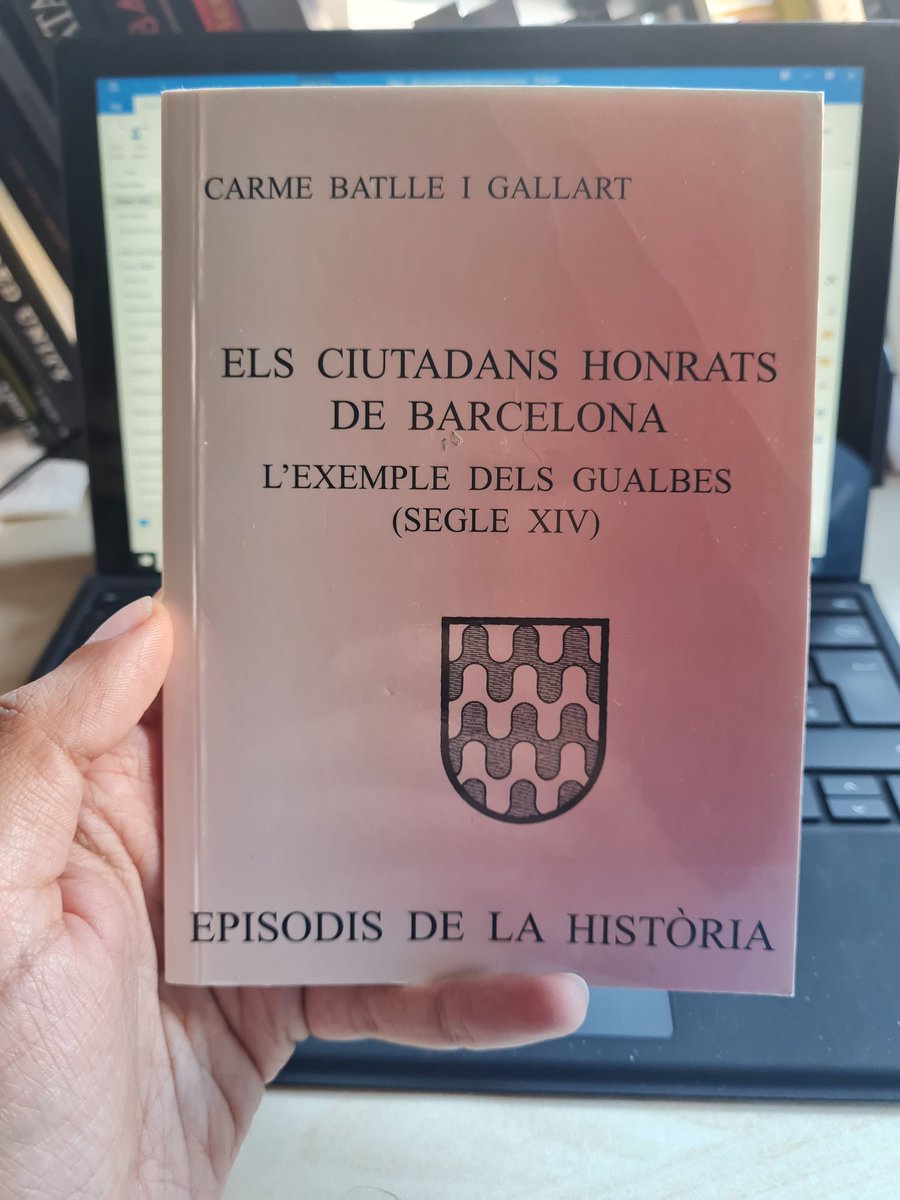
1. L'altre dia llegint sobre els orígens de la família Gualbes, una de les més importants de la Barcelona baix-medieval, vaig visitar un parell d'indrets de Barcelona que em van fer pensar en la importància de cuidar millor del nostre patrimoni històric. Obro fil ⬇️
2. La família Gualbes era una de les grans famílies de mercaders de la Barcelona del segle XIV, i els seus integrants comerciaven amb tota normalitat amb els indrets més llunyants del Mar Mediterrani: Xipre, Alexandria, Gaza, Rodes...
3. Però els Gualbes no només eren grans mercaders a la Catalunya del segle XIV, sinó que tenien un pes polític important a través de la seva participació recurrent en el govern del Consell de Cent de Barcelona.
9 Feb
1. Bewildered by Mr Borrell trip to Russia? Angry about the humiliation that the EU has suffered because of him? Mr Borrell is marked by his own history and statements such as supporting ministers who led a state terrorism group. Follow the thread to find more ⬇️👇
2. Borrell’s has been very active on human rights inside Spain, but in the wrong side of it. Violating them. How many European know that a PSOE government organized a state terrorism group (GAL) in the eighties? en.wikipedia.org/wiki/GAL_(para…
3. How many Europeans know that this state terrorism group called GAL killed close to thirty people? And when their leaders, a Minister and high officials of PSOE, were condemned what was Borrell’s reaction?
1 Dec 18
Political prisoners @jorditurull @jordialapreso start an indefinite hunger strike. Here’s why [thread] ⤵️⤵️
1) ⚠The Spanish Constitutional court admits only 1% of the appeals against pre-trial detention. ⚠The SCC has admitted 100% of those appeals presented by Catalan political prisoners and has NOT resolved any of them.
2) ⚠ The law sets a deadline of 30 days to the SCC to resolve the appeals ⚠The first appeal was submitted more than 365 days ago
21 May 18
Many people have written about Rivera as some kind of Spanish Macron. That’s plainly wrong. Many people in Catalonia (and Spain) have for long considered C’s as a right-wing nationalist/populist party. Why? Thread below 👇⚡
2)First of all. C’s is not a “new liberal party born out of the crisis”. C’s was born in 2006 as an Spanish nationalist outfit in Catalonia with the intention of undermining the use of Catalan language in schools and public media. elpais.com/elpais/2006/09…
3) (Background info:Catalan school system is a consensus policy to ensure social cohesion and adequate protection of the Catalan language after 40 years of Franco dictatorship where Catalan was marginalized and banned from schools and institutions. 99% of Catalans speak Spanish)

19 de set. 2021

Article by Odei A.-Etxearte on the virtual impossibility of a legal referendum on Catalan self-determination (17 SEPT 2021)

Article by Odei A.-Etxearte in Vilaweb on the virtual impossibility of a legal referendum on Catalan self-determination, given the restrictive case-law of the Spanish Constitutional Court. I hope she authorizes this English translation (by M.S.)

Click here  if need be to access the whole text.

16 de set. 2021

Pere Cardús argues that confrontation on the Catalan side is essential (15 SEP 2021)

In his Twitter thread, Pere Cardús argues that unless there is confrontation in the Catalan side at the table of dialogue, the negotiation will be doomed to failure. This is an English translation: I hope the author doesn't mind.

Click here  if need be to access the whole text.

Twitter thread by @cat_nordic on coming months (20 JUL 2021)

Here is an English translation of a Twitter thread by @cat_nordic on events she expects in the coming months. I hope she doesn't mind.
Click here  if need be to access the whole text.

Are all points of view equally valid? (26 May 2020)

A friend sent this to me. He's unsure about the source. I found the earliest posting of this text here:
Click here  if need be to access the whole text.

5 de set. 2021

A Twitter thread by Xavi Domenech on Spain's new offensive against the Catalan independence movement, using the NYT (4 SEPT 2021)

An English translation (by M. Strubell, woth the author's permission) of a Twitter thread by Xavi Domenech on Spain's new offensive against president Puigdemont's entourage (especially Prof. J. L. Alay) Catalan independence movement, using the NYT  (4 SEPT 2021)

Click here  if need be to access the whole text.

Lawyer Gonzalo Boye's article on the illegal dissemination of the contents of Prof. Alay's mobile phone (5 SEPT 2021)

The illegal dissemination of the contents of Prof, Alay's mobile phone, by a court or the Spanish police, is a direct attack on citizens' fundamental rights.
Click here  if need be to access the whole text.

10 d’ag. 2021

Xavier Domènech accuses Spanish politicians and media of having whipped up a media storm against the Catalans (15 JULY 2021)

A strongly-worded article by Xavier F. Domènech accusing Spanish politicians and media of having whipped up a hate storm against the Catalan independence movement. I hope he doesn't mind my publishing an English version.
Click here  if need be to access the whole text..

9 d’ag. 2021

An article by Dolors Feliu on the next steps on the road to independence [20 JUL 2021]

An article by lawyer Dolors Feliu on the pitfalls in the next steps on the road to independence. She has kindly authorized this English translation.
Click here  if need be to access the whole text.

An article by @GemmaLinan, translated into English, on Spain's on-going repression of the #Catalan independence movement through the courts (25 JULY 2021)

Journalist Gemma Liñán explains how Spain's judicial strategy against the process is crumbling because of the lack of evidence. 
Click here  if need be to access the whole text.

Twitter thread by Ramir De Porrata-Doria, on the coming "dialogue" with Spain (24 JULY 2021)

Here is a Twitter thread by Ramir De Porrata-Doria, arguing that the Catalans need to play their hand carefully in the coming "dialogue" with Spain, that many see doomed to failure. 

Click here  if need be to access the whole text.

1 d’ag. 2021

Los Sres. Puigdemont (MEP), Ponsatí (MEP) i Comín (MEP) demandan al Parlamento Europeo, por ocho motivos (18 MAY 2021)

Ha sido comentado una decisión del Tribunal General de la UE, maliciosamente mal interpretada por la prensa española. He aquí los motivos de la demanda inicial.

Click here  if need be to access the whole text.

21 de jul. 2021

Twitter thread by Albert Royo (20 JUL 2021)

A dramatic call by one of the 30+ politicaians and high ranking officials of the Government, who have to pay exorbitant sums of money ahead of the final decision of the highly politicized "Tribunal de Cuentas", equivalent to Courts of Auditors elsewhere, though with very few economists and accountants among its members, who include at least one former minister. 

Click here  if need be to access the whole text.

6 de jul. 2021

Incredulidad por el discurso de Sáenz de Santamaría sobre Cataluña y el Diplocat (17 DIC 2017)

Incredulidad por el discurso de Sáenz de Santamaría sobre Cataluña. Críticas a la vicepresidenta por alardear de haber "descabezado" a ERC y Junts per Catalunya. Huffington Post, 17 DEC 2017.
Clica aquí, si hace falta, para acceder al texto entero

3 de jul. 2021

El MH President Artur Mas, el 9N i el Tribunal de Comptes (3 JUL 2021)

He llegit que el "Tribunal de Ajuste de Cuentas" subhastarà un habitatge del MH president Artur Mas. Però també llegeixo que TOTA la fiança que se li reclamava (a ell i les altres víctimes) s'havia recollit pel per la Caixa de Solidaritat, i dipositat al Tribunal. No és així?

Clica aquí si cal per llegir el text sencer.

29 de juny 2021

AE

TO ALL MEMBERS OF ACADEMIA EUROPAEA

Our distinguished colleague the international Economics scholar Professor Andreu Mas-Colell, is facing legal action by the Spanish authorities for events during his time serving the community in Catalonia as a Minister of Economy. (Andreu Mas-Colell is a former winner of the AE Erasmus Medal, a former AE Trustee, a former Secretary General of the European Research Council and he was a driving force behind the world class ICREA and establishment of the University Pompeu Fabra).


From Prof. Jose Domingues Abrascal (sent 26 June 2021)

Dear Executive Secretary, dear Professor Coates,

I want to express my stronger opposition and condemnation to the use of the Academia Europaea for the purpose of questioning the rule of law in a democratic country which is member of the EU. It is hard to believe for me that you ask us to sing something without sending complete information about the activities for which Prof Mas-Colell is under investigation and what is the court that is investigating him. For your information it is the “Tribunal de Cuentas” (Public Accounts Court) of Spain.

I am not only surprised but strongly opposed to an action of support of someone under investigation by a court of a democratic country.

1. If you see the Democracy Index published by the Economist Intelligence Unit of the Economist Group (publisher of the weekly newspaper The Economist), Spain is one of the not so many Full Democracies in the world. In the said index Spain is in a higher position than France, Japan, United States or Israel.

2. There is a political wish of part of the population of a region of Spain ( 45% of the population aprox. according to several sources) that would like to be independent.

3. Due to the representation system of the Catalonian parliament (rural areas have more representers than urban areas) political parties for independence control the regional parliament.

4. Spanish constitution does not allow for referendums of independence of different regions. When the Spanish constitution was written in 1978, the German Constitution was taken as a reference for this part of the text. The German constitution that does not allow for such a referendum. Many other democratic countries like the United States have similar treatment of regional referendums a do not allow for such kind of referendum.

5. The United Nations do not recognize self-determination right to regions of democratic countries as Catalonia.

6. The “Tribunal de Cuentas” is in charge a auditing the accounts of the different public administrations and administrators.

7. What the “Tribunal de Cuentas” is analyzing is how much public money was spent in the organization of an illegal referendum that was specifically forbidden by the Constitutional Court of Spain. The referendum and other illegal activities forbidden by the Spanish Constitutional Court was organized in 2017 with the support of the regional government in which Prof. Mas-Colell was responsible for its economic department.

8. Obviously, Prof Mas-Colell is an eminent scientist but the auditing of the accounts of which he was responsible in the government of Catalonia should be out of any doubt. That is the reason why he is under investigation.

9. Catalonia is one of the richest regions of Spain and among the rich regions of the EU. It is well known in economy that unity of market should go together with fiscal solidarity. The basic reason for independence is that since the EU now guaranties the unit of market, any rich region would be better off by not shearing their taxes with other no so rich. The same could be said for municipalities or even neighborhoods.

10. Catalonia is not under any kind of prosecution by the rest of Spain. The political autonomy of Catalonia within Spain is larger than that of any other European region.

I would like to beg you to stop using the Academia Europaea for questioning a democratic country and stop asking its members to sign letters without sending a complete, clear and non- biased information. Any other thing is simply a political activity that should be absolutely outside of the activities of the Academia Europaea.

Yours

Prof. José Dominguez

27 de juny 2021

URGENT: Please sign this petition, to send to Spain's Court of Auditors in protest against repression of 41 Catalans. (27 JUN 2021)

Here is a hasty English translation of this petition to protest against a repressive measure that is unimaginable process in any modern democracy. Please sign the petition!

Click here if need be to access the whole text.